

Interpreting the Fourth Geneva Convention: Insights from a high-level discussion in Brussels
Entitled “Diverse impacts of armed conflicts: the need to protect all civilians under the Fourth Geneva Convention”, the event brought together legal experts, humanitarian practitioners, state representatives and representatives of civil society to reflect on how the Convention can continue to respond to the realities faced by civilians in today’s armed conflicts. It was organised by the Belgian Interministerial Commission for Humanitarian Law, the Belgian Red Cross, the ICRC and the Belgian Society for International Law.
Tweet: https://twitter.com/ICRC_bxl/status/2067959808288780422
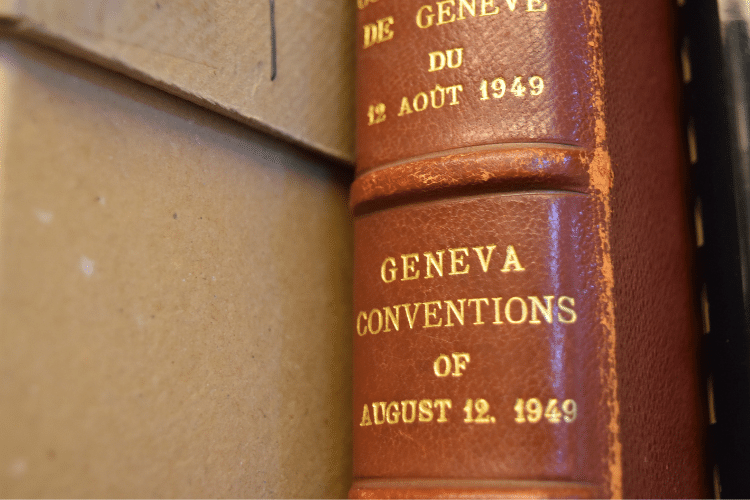
Adopted in 1949, the Fourth Geneva Convention remains the cornerstone treaty protecting civilians in times of armed conflict. Yet many of today's realities—from protracted conflicts and large-scale displacement to digital technologies and evolving forms of warfare—could not have been foreseen when the Convention was drafted.
The updated Commentary reflects developments in the interpretation and application of the Convention and is intended as a practical reference for those working on international humanitarian law. Drawing on extensive research and a global peer-review process, it helps strengthen a shared understanding of the law and supports its consistent application in line with its humanitarian purpose.
A recurring theme throughout the discussions was that the consequences of armed conflict are not experienced equally. Participants highlighted that different people face different risks and needs depending on their circumstances, while pre-existing inequalities are often exacerbated by conflict. Civilians may suffer not only from the direct effects of hostilities, but also from displacement, family separation, disrupted access to healthcare and essential services, restrictions on liberty, and the everyday insecurity associated with armed conflict and occupation.
Against this backdrop, speakers stressed that ensuring meaningful protection requires both a sound understanding of the law and an appreciation of the diverse realities faced by conflict-affected populations. Applying the Fourth Geneva Convention in good faith means interpreting and implementing its protections in a way that safeguards all civilians without discrimination.
Tweet: https://twitter.com/ICRC_LawPolicy/status/2049771847445606851
In his opening remarks, Mr. Eloi Fillion, Head of the ICRC Delegation in Brussels, stressed that the protection of civilians is a collective responsibility and that legal protections can only be effective when they are understood and applied in practice.
“The protection of civilians in armed conflict is not the responsibility of one actor alone. It is a shared responsibility. It concerns ministries and military headquarters, courts and universities, diplomatic and multilateral fora. Above all, it concerns every place where decisions are made that may affect the lives of people caught in war.”
The discussions in Brussels contributed to ongoing efforts to reinforce a coherent understanding of the Fourth Geneva Convention and to ensure that its protections remain relevant and effective in addressing contemporary humanitarian challenges. More than 75 years after its adoption, the Convention continues to provide an essential legal framework for protecting civilians in times of armed conflict.
Legal Disclaimer:
EIN Presswire provides this news content "as is" without warranty of any kind. We do not accept any responsibility or liability for the accuracy, content, images, videos, licenses, completeness, legality, or reliability of the information contained in this article. If you have any complaints or copyright issues related to this article, kindly contact the author above.
